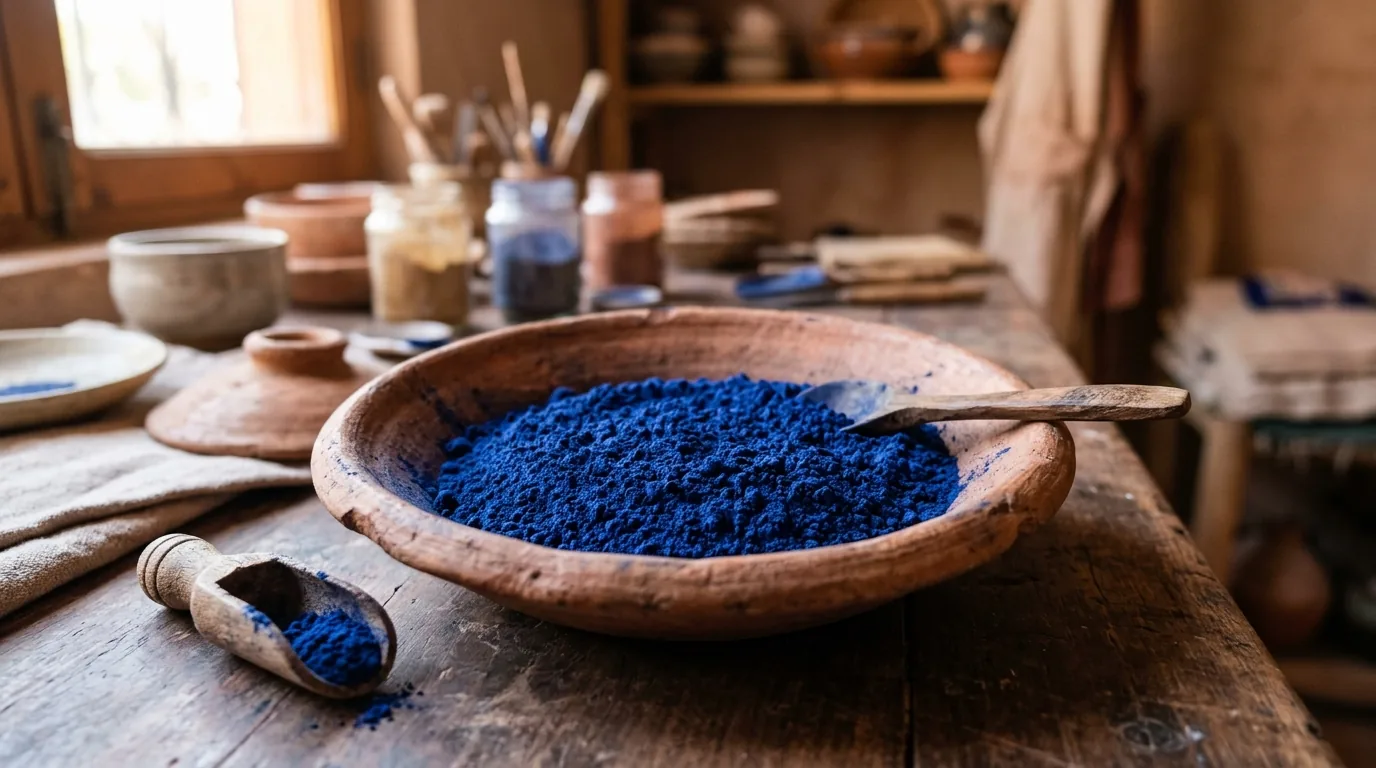
Blue nila has become a social-media star: a deep blue powder from Morocco, mixed into masks and black soap. It's also one of the most misunderstood ingredients we sell. Buyers ask what it is, whether it "whitens" skin, and why two "nila" powders can look completely different. Here are honest answers.
What Nila Is
Nila is a **traditional blue plant powder**, associated with the Sahara and southern Morocco, used for generations in hammam rituals. Real nila is generally made from **indigo-producing plants** (Indigofera species), which give it its colour.
Because "nila" is a traditional name rather than a regulated term, products sold under that name vary. That's the most important thing to know as a buyer.
How It's Traditionally Used
- Mixed into black soap before the hammam.
- In masks, combined with water, rose water, yoghurt or clay.
- In body scrubs and hammam rituals for brides.
The colour stays on the skin briefly and rinses off.
Claims to Avoid
Buying in bulk or under your own label?
Explore our Marrakech manufacturing, custom formulations, and white-label services.
You'll find nila sold as "skin whitening", "lightening" or "anti-dark spots". Be very careful with those words:
- Skin-lightening claims are regulated in many markets, and some products sold as lighteners have been found to contain prohibited substances.
- Research on nila's effects on the skin is limited.
Honest wording: "traditional Moroccan hammam powder", "used in masks and rituals", "leaves the skin feeling soft after rinsing".
Real Nila vs Dyed Powders
Because nila can sell at a premium, the market includes powders coloured with synthetic blue dyes or mixed with fillers. Some checks:
| Check | What to look for |
|---|---|
| Ingredient list | A plant name (e.g. Indigofera). Be wary of "nila" with no composition at all |
| Colour | Deep, natural blue; suspiciously bright, uniform colours deserve questions |
| Water test | Real plant powder settles and colours the water; check that it rinses off the skin without heavy staining |
| Texture | Fine powder without grit or chalky fillers |
| Documents | Ask for the composition and a safety data sheet; for private label, a microbiology test |
| Price | Much cheaper than the market usually means filler or dye |
Who Buys Nila
- Spas and hammams for traditional rituals.
- Heritage and "Moroccan ritual" brands looking for a distinctive product.
- Gift and kit makers - nila looks beautiful in a hammam box.
Storage
Keep it closed, dry and away from light. Like all plant powders, humidity is the main risk.
We supply nila in bulk and in private label packaging - see our [products catalog](/products/) and [private label service](/private-label-moroccan-cosmetics/).
FAQ
What is blue nila made of?
Real nila is generally made from indigo-producing plants. Because the name isn't regulated, always ask for the exact composition.
Does nila whiten the skin?
We don't make that claim. Evidence is limited, and skin-lightening claims are regulated in many markets.
Will nila stain my skin blue?
It can tint the skin briefly. It should rinse off with water and soap.
Can nila be mixed with black soap?
Yes, that's one of its most traditional uses.
Sourcing Moroccan ingredients for your brand?
Direct wholesale supply & custom private label solutions from our Marrakech workshop.
Need this ingredient in bulk?
Direct workshop supply from Marrakech with custom packaging & private label solutions.
Written by Morocco Cosmetic Production Team
We press argan oil, make black soap and fill and label Moroccan cosmetic products in Marrakech.