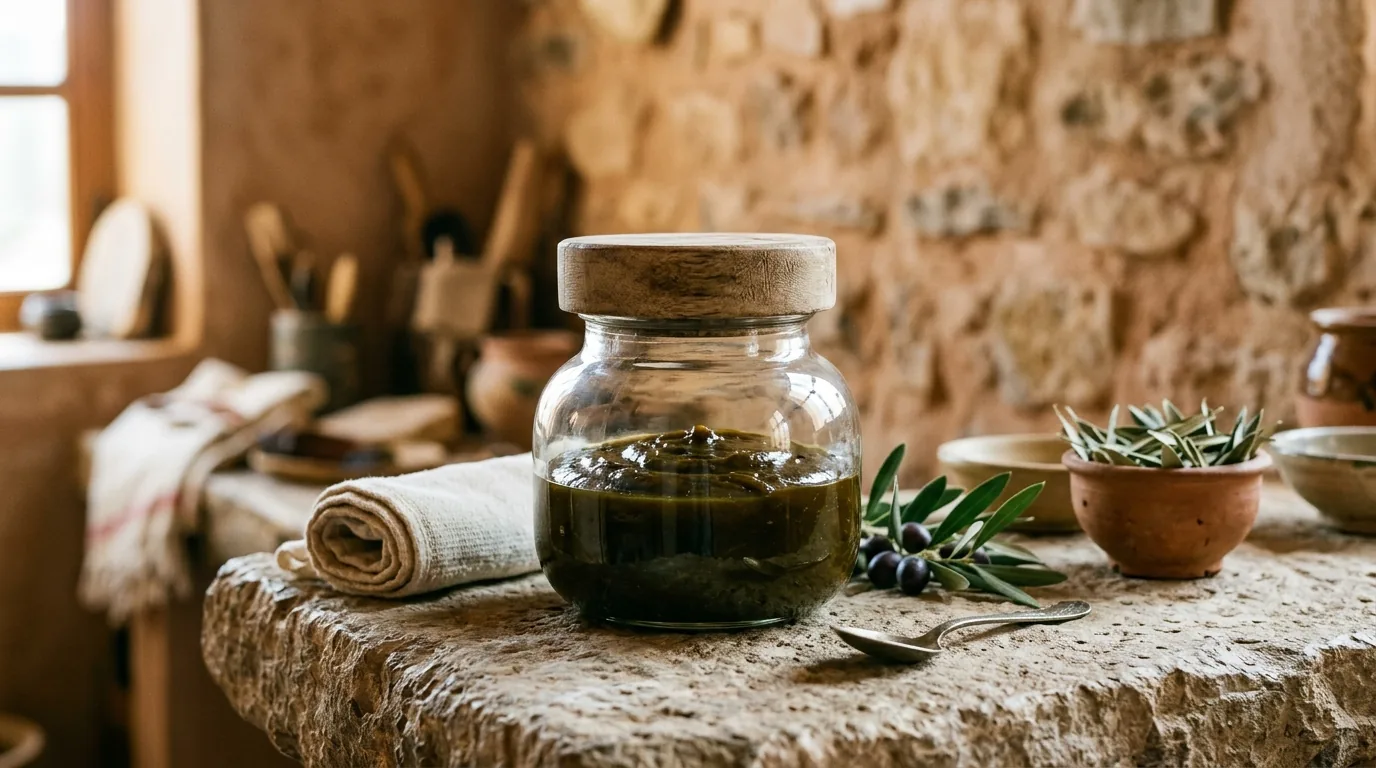
Moroccan black soap - savon beldi - doesn't look like any other soap. It's soft, dark, almost like a paste, and it's the first thing that touches your skin in a traditional hammam. We make it in our Marrakech workshop, so this is not a theory article: it's how the product goes from raw ingredients to the jar, and what we've learned about doing it well.
What Moroccan Black Soap Actually Is
Black soap is a **potassium soap made from olive oil and olive paste**. That's the key difference from a normal bar of soap:
- Bar soaps are usually made with sodium hydroxide, which gives a hard soap.
- Black soap is made with potassium hydroxide (potash), which gives a soft, gel-like soap.
Its INCI name usually starts with **Potassium Olivate**, followed by water and, for scented versions, the added oils or extracts. The dark colour comes from the olives themselves, not from charcoal or dye.
The Ingredients
- Olive oil and olive paste. Traditionally from dark, ripe olives. They give the soap its colour and its rich texture.
- Potassium hydroxide solution. This is what turns oil into soap (saponification). It's handled with care, because it is caustic before the reaction is complete.
- Water.
- Optional additions for scented versions: eucalyptus, argan oil, rose, or nila.
Step by Step: How We Make It
Buying in bulk or under your own label?
Explore our Marrakech manufacturing, custom formulations, and white-label services.
1. Preparing the oils
The olive oil and olive paste are weighed and mixed. Consistent raw materials are the first condition for a consistent soap from one batch to the next.
2. Saponification
The potassium hydroxide solution is added and the mixture is heated and stirred. This is the slow part: the oil and the potash react and the paste thickens into soap. Rushing this step is the most common cause of poor black soap.
3. Resting
The soap is left to rest so the reaction can finish and the texture can settle. A well-rested soap is smooth and even; a rushed one can feel greasy or sting the skin.
4. Checking the soap
Before packing, we check the texture, colour and smell of each batch, and that it rinses cleanly. Like all true soaps, black soap is alkaline - that's normal - but a well-made batch should not leave the skin burning or tight.
5. Adding scents (optional)
For eucalyptus, argan, rose or nila versions, the additions are mixed in at the end, so they're spread evenly.
6. Packing
The soap is filled into tubs for professional use or jars for retail, sealed and labelled with the batch number.
What Makes Good Black Soap - and What to Avoid
| Good sign | Warning sign |
|---|---|
| Smooth, even, gel-like texture | Lumps, grains, or a layer of oil on top |
| Natural olive smell (or a clear added scent) | Rancid or harsh chemical smell |
| Rinses cleanly | Leaves a greasy film or stings |
| Same colour and texture from batch to batch | Each order looks different |
| Clear ingredient list | "Black soap" with no ingredient list at all |
**A common mistake:** confusing Moroccan black soap with African black soap. African black soap comes from West Africa and is made with plant ashes and other oils such as shea. It's a different product with a different texture and use.
How It's Used
In the hammam, black soap is spread on warm, damp skin and left for a few minutes. It softens the top layer of skin so the kessa glove can exfoliate it. After rinsing, people usually continue with ghassoul clay, rose water and argan oil.
Buying Black Soap in Bulk
If you're a spa, a distributor or a brand, ask your supplier:
- Who makes it? The producer or a reseller?
- What's in it? A full ingredient list for each variant.
- How is it packed? Tub sizes for professional use, jar sizes for retail.
- How consistent is it? Ask for two samples from different batches and compare them.
- How should it be stored? Closed container, away from heat and humidity.
We make our black soap in our own workshop and supply it in bulk tubs, retail jars or under your own label. See our [products catalog](/products/) or our [private label service](/private-label-moroccan-cosmetics/).
FAQ
Is Moroccan black soap really black?
It's dark brown to almost black, depending on the olives used. The colour comes from the olives, not from added dye.
Why is black soap soft?
Because it's made with potassium hydroxide instead of sodium hydroxide. Potassium soaps are naturally soft.
Can black soap be used on the face?
Many people use it on the body only. If used on the face, apply a small amount, rinse well and avoid the eyes. Patch-test first.
How long does black soap keep?
Stored closed, away from heat and humidity, it keeps for a long time. Check the shelf life on the product label.
Sourcing Moroccan ingredients for your brand?
Direct wholesale supply & custom private label solutions from our Marrakech workshop.
Need this ingredient in bulk?
Direct workshop supply from Marrakech with custom packaging & private label solutions.
Written by Morocco Cosmetic Production Team
We press argan oil, make black soap and fill and label Moroccan cosmetic products in Marrakech.